Airspace in Turmoil; The Ripple Effects of the U.S.–Iran War on International Flights
The US military strikes on Iran and the subsequent retaliatory actions have sent shockwaves through the global aviation industry, creating one of the most complex operational crises in recent history. With the airspace over at least eight countries now closed to civilian traffic and major carriers suspending services, the conflict has effectively severed key air bridges between Europe and Asia, leaving thousands of passengers stranded and airlines facing skyrocketing costs.
The immediate impact has been the rapid closure of airspace across the Middle East. In a coordinated effort to ensure civilian safety, countries including Iran, Israel, Iraq, Jordan, Qatar, Bahrain, Kuwait, and the United Arab Emirates have shuttered their skies. Syria has partially closed its airspace, further complicating navigation. These closures have obliterated the primary flight corridors used daily by hundreds of commercial flights, forcing a mass rerouting that is straining global air traffic management.
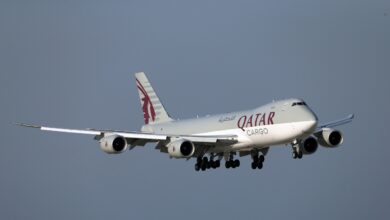
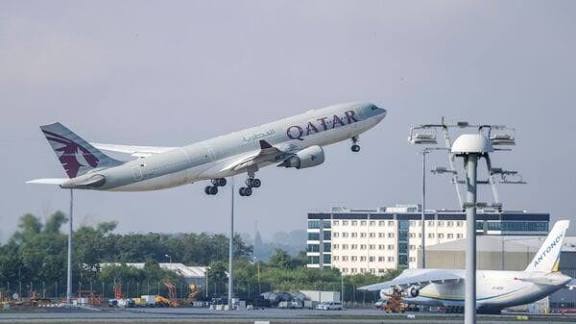
In response, over 20 international airlines have suspended flights to and over the region. European carriers like Lufthansa, Air France, and British Airways have halted services to destinations such as Tel Aviv, Amman, and Dubai. Major Gulf carriers, including Qatar Airways, Emirates, and flydubai, have temporarily grounded operations as their home airspace is inaccessible. This has created chaos at major transit hubs. At Dubai International Airport, one of the world’s busiest, all operations were suspended, with authorities pleading with passengers to stay away. In Doha, scenes of “thousands” of stranded travelers waiting in long queues with minimal information have become common.
For passengers, this means indefinite delays and uncertainty. The suspension of flights by airlines like Air India, Turkish Airlines, and Air Canada has left travelers scrambling to find alternative routes, which are scarce due to the overlapping airspace restrictions. The knock-on effect is being felt globally, as aircraft and crews are out of position, leading to further cancellations far from the conflict zone.
Beyond the immediate operational paralysis, the war is inflicting severe economic damage on the industry. The primary driver is the surge in oil prices. As Iran is a major oil producer, the conflict has injected a “pure geopolitical drive” into energy markets. Analysts warn that if the fighting escalates to disrupt shipments through the Strait of Hormuz—through which 20% of the world’s oil passes—crude prices could spike to $120 or even $150 per barrel. For an industry with razor-thin margins, such a fuel cost increase would be devastating, inevitably leading to higher ticket prices for consumers.
Simultaneously, airlines are absorbing the massive cost of rerouting flights. To avoid the closed conflict zones, aircraft are being forced to take circuitous paths. Aviation experts estimate that detours adding two to three hours to a wide-body flight can incur over $7,500 in additional costs per hour for fuel and crew. These extended flight times also disrupt crew schedules and aircraft rotations, creating a logistical nightmare for airline operations centers.
Strategically, this crisis is accelerating a fundamental redrawing of global flight paths. The closure of Middle Eastern airspace, combined with the ongoing restrictions over Russia and Ukraine, has eliminated the most efficient routes between Europe and Asia. Airlines are now forced to navigate a shrinking map of safe corridors, likely relying on longer southern routes via Egypt and Saudi Arabia or northern paths through Central Asia. This fragmented network is poised to become the new normal, increasing flight times and costs permanently.
Furthermore, the conflict is heightening the industry’s already acute sensitivity to overflying conflict zones. The inherent risk of commercial aircraft being misidentified as military targets has been tragically underscored by past incidents. This will lead to a new era of extreme risk aversion. Even after the immediate hostilities cease, airlines will be cautious about resuming flights over the region until long-term stability and the safety of air navigation services are guaranteed.
The ongoing US war in Iran has paralyzed aviation in the heart of the Middle East, imposing immediate hardship on travelers and airlines while creating profound long-term economic and strategic challenges. The industry now faces a future of higher fuel costs, longer flight times, and a permanently altered map of the skies, as the ripple effects of this conflict are felt by every airline and passenger connected to the global network.